Cold Pressed Olive Oil
What does cold pressed olive oil actually mean? Discover why temperature, speed, and processing are crucial for aroma, nutrients, and quality. Learn it at MOLI.
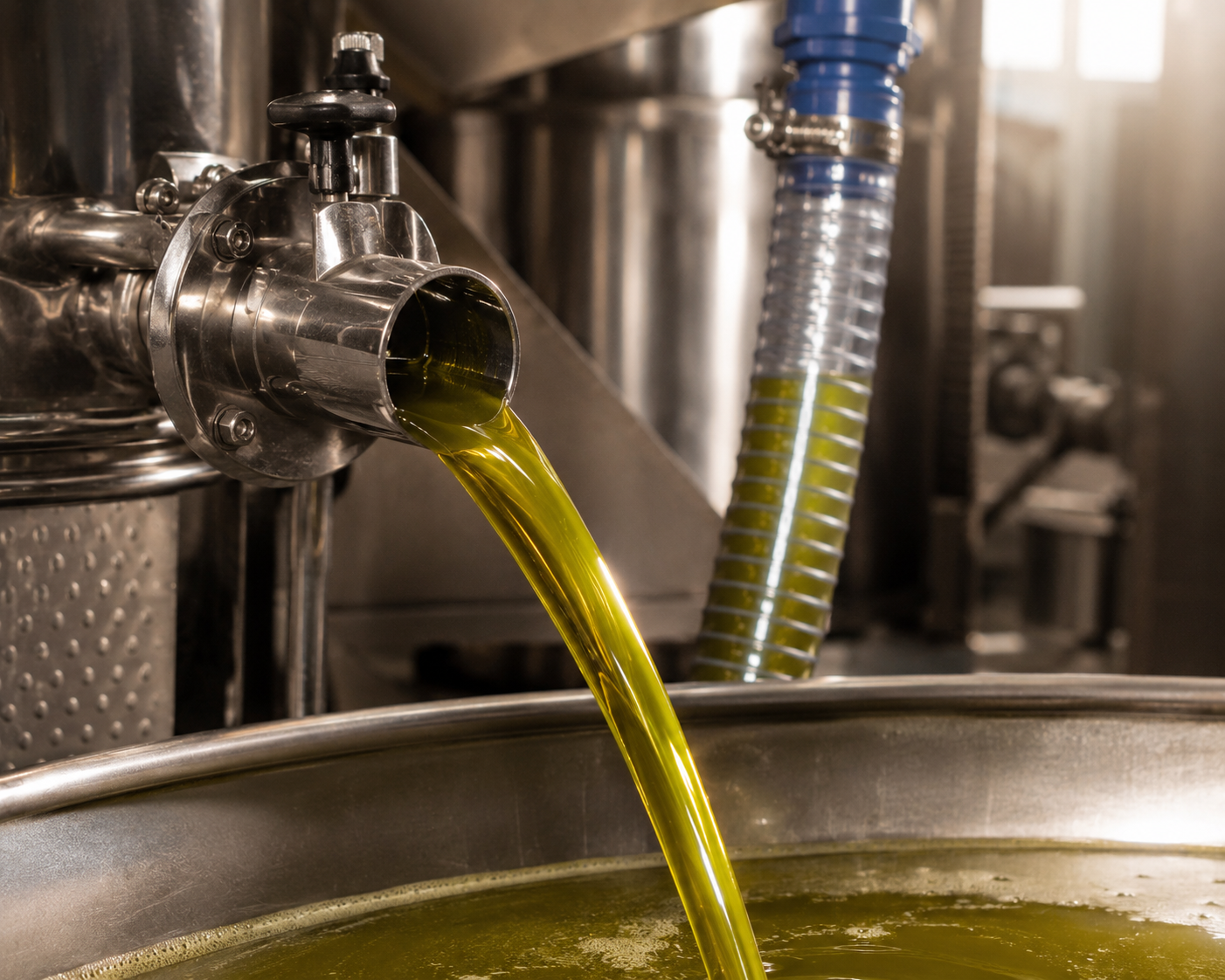
"Cold pressed" is one of the most commonly used terms on olive oil labels, but also one of the least understood. For many consumers, it sounds like a reassuring quality designation, without them knowing exactly what is being cold pressed, why it is important, or how this process makes the difference between an average and an exceptional bottle of oil.
At the Olive Oil Academy of MOLI, we want to make that knowledge accessible. In this article, we explain what cold pressed olive oil actually entails, why temperature plays such a crucial role, how cold extraction compares to hot extraction, and why this process is decisive for aroma, flavor, and nutritional value. We also take you to Taourirt, Morocco, where the family farm behind MOLI ensures that olives are pressed within hours of harvest — and why that speed is just as important as the temperature itself.
Do you want to know what extra virgin olive oil actually means before you read more about cold pressing? Then read our article What is extra virgin olive oil.
What does cold pressed actually mean?
Cold pressed olive oil (in English: cold pressed olive oil) refers to oil that is extracted from olives without any heat being added during the extraction process. The temperature of the olive paste must not exceed a set limit during grinding and centrifugation — internationally set at a maximum of 27°C.
This term originally comes from the time when olive oil was extracted using stone presses and cloths, hence the word "pressing". Nowadays, extraction usually occurs via centrifuges instead of physical presses, but the principle remains the same: no heat, no chemicals, just mechanical separation of oil, water, and pulp.
It is important to realize that cold pressing is a mandatory part of the production process of extra virgin olive oil, but the term itself does not say everything. The freshness of the olives, the speed of processing, and the care taken during the harvest also play an equally significant role in the final result.
Why temperature is so important
Temperature may be the most underestimated variable in olive oil production. During the grinding of olives into paste and the centrifugation to separate the oil, some friction heat is naturally generated. Producers can also choose to deliberately warm the paste, a technique known as "malaxation at higher temperature".
Why would a producer do this? Simple: heat makes the oil thinner and more fluid, allowing it to be released more easily and in larger quantities from the paste. More yield per kilo of olives means more profit. The problem is that heat simultaneously causes the volatile aromatic compounds to evaporate and breaks down the sensitive polyphenols and vitamins.
At temperatures above 27°C, these valuable substances begin to noticeably break down. This is precisely why international quality standards set a maximum temperature for oil that can be labeled as "cold-pressed". It is a conscious choice for quality over quantity — a choice that is directly noticeable in the final product.
Cold extraction versus warm extraction
To understand the difference well, it is useful to compare cold and warm extraction side by side.
Cold extraction
In cold extraction, the olive paste is ground and centrifuged at low temperature (below 27°C). This process typically yields slightly less oil per kilo of olives, but the oil that is obtained retains maximum aroma, a richer flavor profile, and a higher content of antioxidants. This is the method used for premium extra virgin olive oil, such as that from MOLI.
Warm extraction
In warm extraction, the paste is heated to increase the yield. This results in more oil, but this oil is often flatter in taste, less aromatic, and poorer in healthy plant compounds. Warm extraction is often applied in large-scale, industrial production where volume and cost efficiency are prioritized.
Tasting the difference
The difference between the two methods is immediately recognizable to an experienced taster. Cold-pressed oil typically has a fresher, greener scent, a clearer fruitiness, and a noticeable spiciness at the back of the throat — a sign of high polyphenol concentrations. Warm-extracted oil often tastes flatter, milder, and less complex.
Why aroma is preserved in cold pressing
The aroma of olive oil is determined by hundreds of volatile aromatic compounds, which largely arise during the grinding of the olive, when enzymes come into contact with the cell structure of the fruit. This is a delicate, time-sensitive process.
Heat is the greatest enemy of these volatile substances. Just like a fine herb loses its aroma when cooked too long, the aromatic molecules in olive oil evaporate at higher temperatures. Cold pressing keeps the temperature low enough to preserve these substances as much as possible, resulting in oil with a vibrant, complex aroma of freshly cut grass, green tomato, artichoke, or almond — depending on the olive variety and the harvest moment.
This is also why cold-pressed oil is so suitable as a flavoring on its own, for example over a salad or fresh bread, rather than just as a neutral cooking medium.
Why nutrients remain intact
In addition to aroma, temperature also has a direct impact on the nutritional value of olive oil. Extra virgin olive oil naturally contains polyphenols, vitamin E, and other antioxidants that contribute to the well-known health benefits of olive oil. However, these substances are sensitive to heat and oxidation.
Research consistently shows that oil extracted at lower temperatures contains significantly higher concentrations of polyphenols than oil extracted at higher temperatures. These substances are also responsible for the bitterness and spiciness you taste in quality olive oil — a direct, tangible proof of what happens chemically during processing.
Do you want to understand more deeply what polyphenols are and why they are so valuable for both flavor and health? Read our article Polyphenols explained in the Academy.
MOLI: pressing within a few hours after harvest
Cold pressing alone is not enough to produce exceptional olive oil. Equally important is the time between picking the olive and the moment of pressing. Olives begin to oxidize and ferment immediately after harvest, especially when stored in large bags or silos under their own weight.
At MOLI, olives are processed within a few hours after harvest on the family farm in Taourirt, Morocco. This speed is a conscious, labor-intensive choice: it requires precise planning of harvesting and pressing, small batches, and constant presence during the harvest season. The result is oil with an exceptionally low acidity level, a vibrant aroma, and a polyphenol content that is well above average.
This approach stands in stark contrast to many large-scale producers, where olives are sometimes stored for days to weeks before reaching the press. Every day of delay measurably affects quality — a detail that is rarely mentioned on a label, but makes the difference between mediocre and exceptional oil.
Curious about what the harvest season looks like in practice, and why timing is so crucial for the end result? Read our article about the Harvest Season in the Academy. And for a complete overview of the entire production process, from tree to bottle, we would like to refer you to How Olive Oil is Made.
Myths about cold-pressed olive oil
There are several persistent misconceptions about cold-pressed olive oil that are worth correcting.
Myth 1: "Cold-pressed means that a physical press is literally used." Although the term historically refers to the use of stone presses and cloths, almost all olive oil is now extracted using centrifuges. The term "cold-pressed" now refers to the temperature at which the process occurs, not to the specific equipment.
Myth 2: "All cold-pressed olive oil is automatically extra virgin." Cold pressing is a necessary but not sufficient condition for the extra virgin classification. Acidity, peroxide value, and a sensory taste test must also meet strict standards before oil can carry the extra virgin label.
Myth 3: "Cold-pressed oil is always of the best quality, regardless of the olives." The extraction method is just one link in the quality chain. The quality of the olives themselves, the timing of the harvest, the speed of processing, and the storage conditions also determine the final result. Cold pressing damaged or overripe olives still yields mediocre oil.
Myth 4: "Cold-pressed means that the oil is never heated, not even during storage or transport." The term refers solely to the extraction process itself. After pressing, olive oil must still be stored cool and dark to maintain quality — cold pressing offers no protection against heat or light after production.
Myth 5: "More expensive oil is always cold-pressed, and cheap oil never is." Price is not a guarantee. Some medium-sized producers apply cold pressing correctly without charging an exorbitant price, while some premium-looking brands still use misleading labels. The only certainty comes from paying attention to harvest date, origin, and, if available, chemical analysis values.
Frequently asked questions
What is the difference between cold-pressed and regular olive oil? Cold-pressed olive oil is extracted at a temperature below 27°C, without the addition of heat. This preserves aroma, flavor, and nutrients better than oil extracted at higher temperatures, which often results in a flatter, less complex oil.
Is cold-pressed olive oil the same as extra virgin olive oil? No, not automatically. Cold pressing is a mandatory part of extra virgin production, but the oil must also meet strict standards for acidity and pass a sensory taste test before the extra virgin label can be used.
Why is speed after harvest just as important as temperature? Olives begin to oxidize and ferment immediately after picking. The longer olives wait before being pressed, the higher the acidity and the lower the quality, regardless of how cold the final pressing process is.
How can I recognize real cold-pressed olive oil in the store? Look for a listed harvest date, origin information, and, where possible, analysis values such as acidity and polyphenol content. A fresh, green, and fruity aroma is also a good indicator of proper cold processing.
Does cold-pressed olive oil lose quality over time? Yes. Cold pressing guarantees an optimal starting point, but olive oil remains a fresh product. Store the bottle in a dark and cool place, and preferably consume within twelve to eighteen months after the harvest date for the best flavor profile.
Why does MOLI press so quickly after the harvest? To minimize oxidation and fermentation of the olives. By pressing within a few hours after harvesting at the family farm in Taourirt, Morocco, MOLI maintains an exceptionally low acidity level and a high polyphenol content in the final oil.
Conclusion
Cold-pressed olive oil is more than a label with an appealing sound. It represents a careful, temperature-controlled extraction process that maximally preserves aroma, flavor, and valuable nutrients. But cold pressing alone is not enough — the speed between harvest and pressing, the quality of the olives, and the care of the entire chain together determine whether a bottle of oil is truly exceptional.
At MOLI, these factors come together at the family farm in Taourirt, Morocco, where olives are pressed at low temperature within a few hours after harvest. The result is a vibrant, aromatic, and nutrient-rich extra virgin olive oil that lets you taste the difference between well-intentioned cold-pressed and truly cold-pressed.
Taste the difference of MOLI
Now that you know what cold pressing really means and why speed and temperature are so decisive, the next step is simple: taste for yourself. Discover the cold-pressed, single origin extra virgin olive oil from MOLI, straight from our family farm in Taourirt, Morocco.