Moroccan Olive Oil: Why Taourirt Provides the Ideal Environment for Exceptional Oil
Discover why Moroccan olive oil is among the most special in the world. Climate, soil, tradition, and single origin come together in Taourirt, at MOLI.
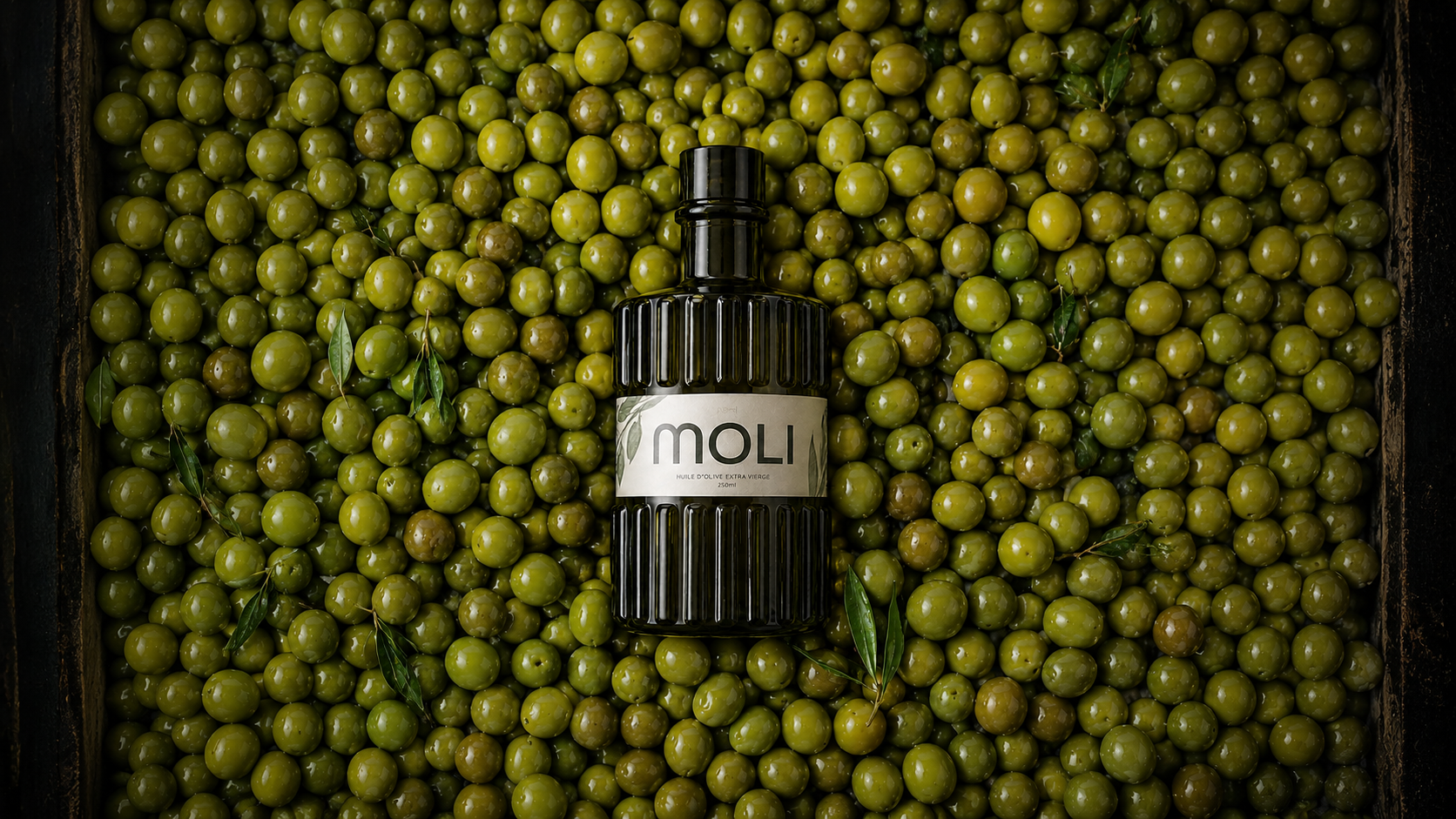
When people think of olive oil, images of Italy, Spain, or Greece often automatically come to mind. Morocco remains surprisingly underrepresented in that list — while the country has a combination of climate, soil, tradition, and craftsmanship that leads to some of the most exceptional olive oil in the world. In the fertile valleys and sun-drenched hills of the country, olive oil is not a trend, but a way of life that has been passed down for generations.
At the Olive Oil Academy of MOLI, we take you to the source: Taourirt, Morocco, where our family farm produces oil that captures the essence of this region. In this article, you will discover why Morocco, and Taourirt in particular, offers ideal conditions for exceptional olive oil — and why that quality only comes to life when tradition, care, and craftsmanship meet, as at MOLI.
Morocco: an Underrated Olive Oil Country
Morocco is one of the leading olive oil producing countries in the world, with olive cultivation dating back to Phoenician and Roman times. The country combines a Mediterranean climate in the north with unique microclimates inland, resulting in a remarkable diversity of flavor profiles — from spicy and robust to mild and fruity.
What truly distinguishes Moroccan olive oil is the combination of natural conditions and artisanal production methods that have largely disappeared in many other olive oil regions due to industrialization. In regions like Taourirt, olive oil is still produced as it always has been: with patience, precision, and respect for the fruit.
Climate: the foundation of character
The climate of an olive oil region largely determines the character of the final oil. Morocco offers a unique combination of a mild Mediterranean climate along the coast and a drier, more continental climate inland, with warm, dry summers and cooler winters.
This climatic diversity allows olive trees to grow under stress — and it is precisely this mild stress that is essential for quality. Olive trees that experience too much water and too little temperature variation often produce flatter, less complex oil. Trees that, on the other hand, grow in a climate with clear temperature differences between day and night, and limited, well-timed rainfall, develop a higher concentration of aromatic compounds and polyphenols in their fruit.
Sun: energy that translates into flavor
Morocco enjoys an exceptional number of sunshine hours per year, particularly inland. This abundant solar radiation is directly linked to the photosynthesis of the olive tree, the process by which the tree converts sunlight into energy and nutrients for the fruit.
More sunlight generally means a higher concentration of oils and polyphenols in the olive, which translates into a more intense flavor and a richer aroma in the final oil. This partly explains why Moroccan olive oil is often described as vibrant, spicy, and pronounced — a direct result of the intense, prolonged sun exposure that the olives receive during the growing season.
Altitude: why altitude makes a difference
A often underestimated factor in olive oil production is the altitude at which the trees grow. Regions at higher altitudes, such as parts of inland Morocco, experience cooler nights, even during the warmest summer months. This temperature difference between day and night — known as the diurnal temperature variation — slightly slows the ripening of the olive and allows the fruit to develop more aromatic complexity.
Trees at altitude are also often faced with less humidity and lower pressure from pests and fungi, resulting in healthier olives without the need for intensive chemical treatment. This contributes to both the purity and flavor intensity of the final oil.
Soil: the silent architect of flavor
Where climate and sun often receive the most attention, the soil is at least as determining for the character of olive oil. The soil in regions like Taourirt often consists of a mineral-rich, well-draining composition — a combination that forces olive trees to develop deep roots in search of water and nutrients.
This deep rooting not only ensures resilient, healthy trees, but also directly influences the mineral composition of the olive itself. Just as winemakers talk about "terroir", the soil composition plays a crucial role in the final flavor profile of olive oil: the subtle spiciness, the mineral undertone, and the length of the aftertaste can all be traced back to the ground in which the tree roots.
The harvest: timing as an art form
The harvest is perhaps the most critical moment in the entire olive oil production process. The exact moment of picking — too early, just on time, or too late — has a direct impact on acidity, aroma, and polyphenol content of the final oil.
In Morocco, and specifically in regions like Taourirt, the harvest is still often largely done by hand or with light mechanical tools, which minimizes damage to the fruit. Damaged olives oxidize faster and lead to higher acidity, which directly affects the quality of the oil.
Do you want to understand exactly how timing, picking method, and processing speed together determine the quality of olive oil? Then read our extensive article about the Harvest season in the Academy.
Olive varieties: the character of Moroccan oil
Morocco has several native and introduced olive varieties, of which the Picholine Marocaine is the most well-known and widespread. This variety is known for its robust character, a pronounced green, spicy flavor, and a relatively high polyphenol content — characteristics that make the variety particularly suitable for producing premium extra virgin olive oil.
In addition to the Picholine Marocaine, other varieties are also grown in certain regions, each with its own unique flavor profile, ranging from mild, fruity notes to intensely spicy and bitter tones. This diversity of varieties, combined with the unique terroir of each region, makes Moroccan olive oil a nuanced and layered product that is difficult to summarize in a single flavor description.
Tradition: ancient knowledge that proves itself
Olive cultivation in Morocco is not a recent development, but a practice that has been passed down from generation to generation for centuries. This tradition encompasses not only the cultivation and harvesting of olives but also deep-rooted knowledge about the right time to pick, the ideal processing methods, and the maintenance of the trees themselves.
In many families, including those behind MOLI, this knowledge is passed down orally — from parent to child, from generation to generation. The result is a production method that intuitively takes into account the nuances of the land, something that is difficult to replicate within a large-scale, industrial production model.
Single origin and cold pressing: the MOLI promise
Two principles form the core of what distinguishes MOLI: single origin and cold pressing. Single origin means that our oil comes exclusively from olives grown on our own family farm in Taourirt — not blended with oil from other regions or countries. This guarantees complete traceability and a consistent, recognizable flavor profile that reflects the unique terroir of Taourirt.
Cold pressing refers to the extraction process where the temperature never exceeds 27°C, allowing aromas, flavor compounds, and valuable polyphenols to be maximally preserved. Do you want to know exactly what the difference is between extra virgin olive oil and other quality categories, and why this classification is so strictly regulated? Read our article What is extra virgin olive oil in the Academy.
At MOLI, these two principles come together to create an oil that is not only traceable and authentic but also tasteably superior to blended, mass-produced alternatives.
Family farms versus industrial production
One of the most important yet least visible differences in olive oil production is the scale at which it operates. Industrial producers often work with olives from countless different orchards, regions, and sometimes even countries, which are combined into large, anonymous batches. This makes large-scale production efficient, but it comes at the expense of traceability, consistency, and character.
Family farms, like those behind MOLI, operate fundamentally differently. Every tree is known, every harvest is carefully planned, and every batch of oil is traceable to a specific piece of land. This approach requires more time, more attention, and more labor — but results in oil with an authenticity and quality that industrial production simply cannot match.
Why Taourirt is unique
Taourirt, located in the northeast of Morocco, offers a rare combination of conditions that make the region particularly suitable for high-quality olive cultivation. The region enjoys a continental climate with warm, dry summers and colder winters, which creates a clear seasonal stress that prompts the olive tree to develop concentrated, aromatic fruits.
The soil around Taourirt is mineral-rich and well-draining, which stimulates deep rooting and contributes to the resilience and health of the trees. The combination of sufficient elevation, abundant sunlight, and limited, well-timed rainfall results in olives with an intense flavor profile and above-average polyphenol content.
Equally important is the human factor: in Taourirt, olive cultivation is still practiced as a craft, with generations of accumulated knowledge about the specific nuances of the land. This combination of natural conditions and human craftsmanship makes Taourirt an exceptional place for the production of single origin extra virgin olive oil.
Curious about the complete process, from olive tree to bottle, and how each step contributes to the final result? Read our article How olive oil is made in the Academy.
Why MOLI is different from industrial brands
The olive oil market is dominated by large, industrial brands that focus on volume, low prices, and wide availability. MOLI consciously chooses a different path.
Traceability over anonymity. Where industrial brands blend oil from countless sources, every bottle of MOLI can be traced back to our own family farm in Taourirt. You know exactly where your oil comes from.
Speed over volume. Our olives are pressed within hours of being harvested, instead of waiting days or weeks as is often the case with large-scale processing. This speed preserves freshness, lowers acidity, and maximizes the polyphenol content.
Craftsmanship over automation. Our family manages the land, the trees, and the production process with the same care that has been passed down for generations. This stands in stark contrast to the fully automated, anonymous processes of industrial producers.
Quality over marketing. Where many brands hide behind attractive labels, MOLI lets the oil speak for itself: fresh, complex, and authentic, with a harvest date and origin that are completely transparent.
The result is an oil that not only tastes of Morocco, but specifically of Taourirt — a story that you find in every drop.
Frequently asked questions
Why is Moroccan olive oil known for its quality? Morocco combines a diverse climate, abundant sunlight, mineral-rich soils, and centuries-old cultivation traditions. These factors together result in olives with an intense, complex flavor profile and a high polyphenol content.
What makes Taourirt special for olive cultivation? Taourirt offers a continental climate with clear temperature differences, a mineral-rich soil, and a long tradition of artisanal olive cultivation — a combination that produces olives with exceptional flavor depth and quality.
What is the difference between single origin and blended olive oil? Single origin olive oil comes from one specific location, without blending with oil from other regions or countries. This guarantees traceability and a consistent, recognizable flavor profile, unlike blended oil whose origin is often unclear.
Why does MOLI choose a family farm instead of large-scale production? A family farm allows for each tree, each harvest, and each production process to be managed with individual care. This results in higher quality, better traceability, and a more authentic end product than large-scale, automated production can offer.
Is Moroccan olive oil as good as Italian or Spanish olive oil? Quality does not depend on the country of origin, but on climate, soil, olive variety, harvest timing, and processing. Morocco, and regions like Taourirt in particular, offer conditions that are fully comparable to the most renowned Mediterranean olive oil regions.
How do I recognize authentic Moroccan single origin olive oil? Look for a clearly stated origin (preferably a specific region or farm, not just "Morocco"), a harvest date, and information about the processing method, such as cold pressing within a few hours after harvest.
Conclusion
Moroccan olive oil deserves a more prominent place in the global conversation about premium olive oil. The combination of a diverse climate, abundant sun, strategic elevation, mineral-rich soil, and centuries-old tradition makes regions like Taourirt an exceptional environment for producing the highest quality olives.
At MOLI, all these factors come together on our family farm in Taourirt, where single origin olives are cold-pressed into extra virgin olive oil within hours of harvest, fully reflecting the character of this unique region. While industrial brands opt for volume and anonymity, MOLI chooses traceability, craftsmanship, and authenticity — in every bottle.
Discover the taste of Taourirt
Now that you know why Morocco, and Taourirt in particular, is one of the most special olive oil regions in the world, the next step is simple: tasting. Discover the single origin, cold-pressed extra virgin olive oil from MOLI, straight from our family farm in Taourirt, Morocco.