What is extra virgin olive oil?
What is extra virgin olive oil really? Discover the legal definition, acidity, cold pressing, and how to recognize premium olive oil. Learn it at MOLI.
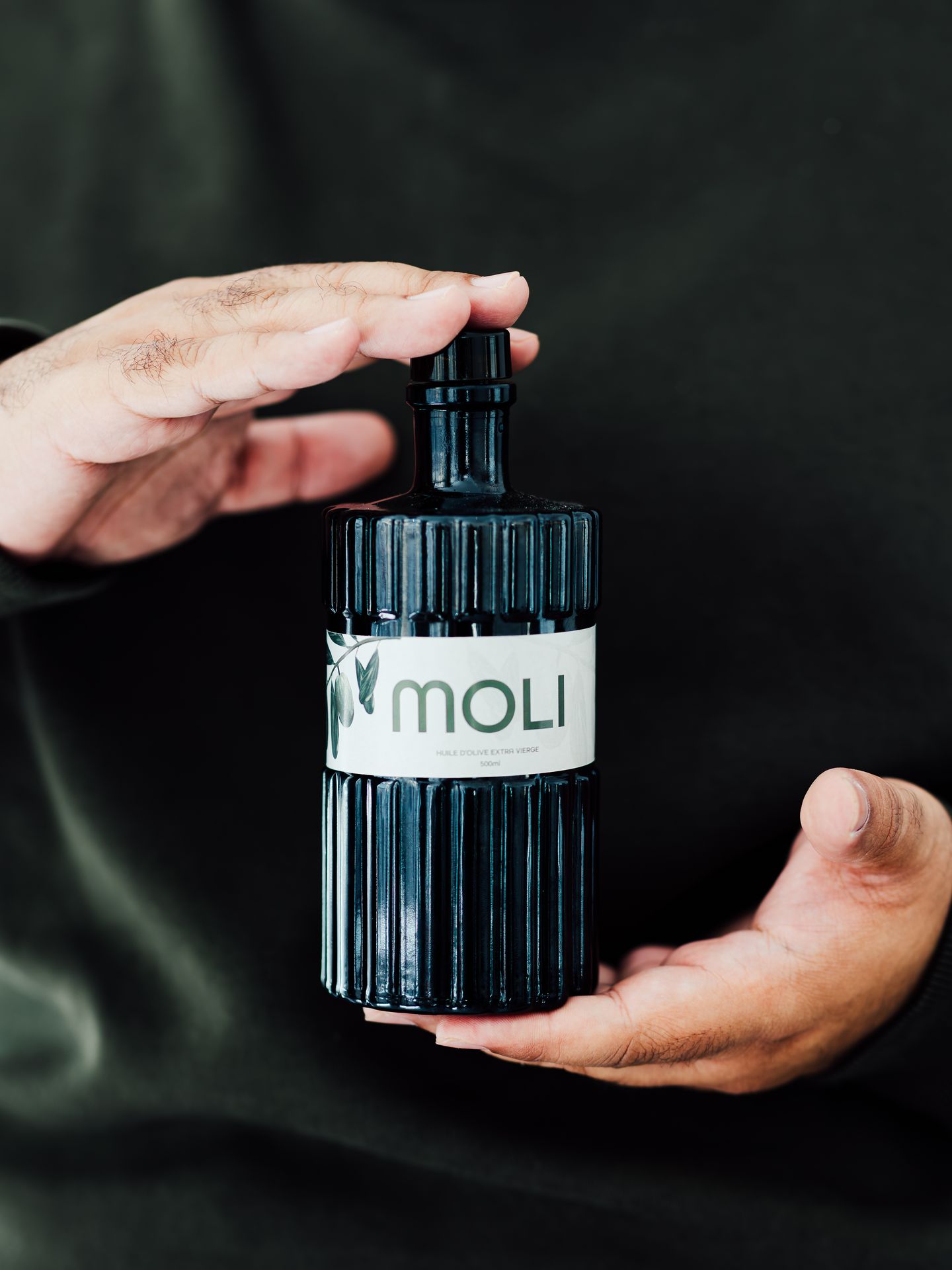
There is much talk about extra virgin olive oil, but few people know what the term actually means. Is it just a marketing label on a bottle, or is there a strict, controlled reality behind it? The answer is: a bit of both. "Extra virgin" is a protected, legally defined category — but it is also a term that is often misused in practice on shelves full of mediocre oil.
At the Olive Oil Academy of MOLI, we believe that a good purchasing decision starts with knowledge, not with a pretty label. In this article, we explain in detail what extra virgin olive oil is, what legal and chemical standards apply to it, why cold pressing and freshness are so crucial, and how you as a consumer can separate the wheat from the chaff. We will also take you to Taourirt, Morocco, where the family business behind MOLI has been producing olive oil for generations based on tradition and craftsmanship.
What is extra virgin olive oil exactly?
Extra virgin olive oil (in English: extra virgin olive oil) is the highest quality category of olive oil that exists. It is oil that is exclusively mechanically extracted from olives, without the use of chemicals, heat, or refining. In other words: it is pure olive juice, obtained in a way that preserves the natural flavor, aroma, and nutritional value of the fruit as much as possible.
The origin: from olive to bottle
The process begins at the harvest. Olives are picked — ideally by hand or with light mechanical tools — and brought to the mill as quickly as possible. There, they are washed, ground into a paste, and then centrifuged to separate the oil from the water and the pulp. No step in this process may involve chemical solvents or excessive heating. What remains is the most natural form of olive oil that exists.
Why "extra virgin" is the highest category
Olive oil has different quality levels: extra virgin, virgin, and regular (refined) olive oil. Extra virgin olive oil must meet strict chemical limits and pass a sensory taste test by a recognized panel of tasters. If the oil shows even one defect — such as rancidity, mustiness, or a vinegary taste — the label "extra virgin" cannot be used. This makes it the only category of olive oil that is checked both chemically and organoleptically.
The legal definition of extra virgin olive oil
The term "extra virgin olive oil" is not a non-binding marketing claim. It is a legally protected designation, established in international and European regulations.
International standards (IOC, EU)
The International Olive Council (IOC) and the European Union have strict standards that olive oil must meet to be classified as "extra virgin." These standards include:
- A maximum free acidity of 0.8%
- A peroxide value below a set limit, indicating how fresh and undamaged the oil is
- Specific values for UV absorption (K232 and K270), indicating oxidation or blending with other oils
- A mandatory sensory assessment without observable defects
Chemical and sensory inspections
What makes this regulation special is the combination of laboratory analysis and human taste assessment. A panel of certified tasters evaluates the oil on positive characteristics (fruitiness, bitterness, spiciness) and negative characteristics (rancidity, mustiness, wine-like flavor). Only oil that succeeds on both fronts may carry the extra virgin label. This is exactly why not every bottle labeled "olive oil" is actually extra virgin — many products on store shelves simply would not pass this test.
Acidity: the first quality indicator
The acidity of olive oil is one of the most mentioned, but also most misunderstood quality criteria.
What acidity does and does not say
Acidity indicates the degree of fatty acid breakdown in the olive before and during processing. Damaged, overripe, or poorly stored olives develop free fatty acids, which increases acidity. Extra virgin olive oil may legally contain no more than 0.8% free acidity — at MOLI, our values are typically well below this threshold, thanks to the quick processing of freshly harvested olives.
Important to know: acidity says little about taste. You do not taste "acidity" on your tongue like you taste lemon juice. It is a chemical measurement, not a taste experience. A low acidity is a sign of careful processing, but does not guarantee good taste on its own — freshness and the quality of the olives are also determining factors.
Cold pressing: why the process matters
One of the most important characteristics of real extra virgin olive oil is that it is cold pressed. Cold pressing means that the olives are processed at a temperature below 27°C, without the use of heat to increase the yield.
Why is this so important? Heat does speed up the extraction process and yields more oil, but it comes at the expense of aromas, flavor compounds, and valuable antioxidants. Cold pressing is therefore a conscious choice for quality over quantity.
At MOLI, each harvest is cold pressed within a few hours of picking, so that the natural properties of the olive are maximally preserved. Do you want to understand exactly how this process unfolds step by step, and why temperature plays such a crucial role? Then read our extensive article Cold Pressing Explained in the Olive Oil Academy.
Freshness: the forgotten factor
While acidity and pressing method are often emphasized, freshness is still too often overlooked — while it may be the most important factor for both flavor and health.
Harvest Time and Shelf Life
Olive oil is, unlike wine, not a product that improves with time. It is a fresh juice that tastes best within twelve to eighteen months after the harvest, and ideally should be consumed within the first year. The longer oil sits on the shelf, the more the aromatic compounds break down and the more the oil oxidizes. This is why the harvest date (not the expiration date) on a label is so important.
Polyphenols and Antioxidants
Fresh, high-quality extra virgin olive oil naturally contains high concentrations of polyphenols — powerful antioxidants responsible for the characteristic bitterness and throat pepperiness you taste in real quality oil. These compounds contribute not only to flavor but also to the well-known health benefits of olive oil. As oil ages, the polyphenol content decreases. Want to know more about these compounds and why they are so valuable? Read our article Polyphenols explained.
Why supermarket olive oil is different
Many consumers wonder why a bottle of olive oil costing three euros tastes so different from a premium bottle from a specialized producer. The answer lies in the entire journey, from olive tree to bottle.
Blends, refining, and mislabeling
Much cheap "olive oil" in supermarkets is actually a blend of refined olive oil (chemically treated to mask defects) with a small percentage of extra virgin oil, to justify some flavor and the label. Additionally, large-scale mislabeling and fraud in the olive oil sector occur regularly: studies have repeatedly shown that products sold as "extra virgin" do not meet sensory or chemical standards.
Furthermore, olives for mass production are often stored for days to weeks before being processed, which increases acidity and decreases freshness. Large-scale presses also often operate at higher temperatures to maximize yield — at the expense of flavor and quality.
Price versus quality
Premium olive oil is more expensive, and there is a good reason for that. Manual or early harvest, quick processing, cold pressing, small batches, and strict quality control simply cost more than large-scale, automated production. When you choose premium olive oil, you are not paying for a pretty label, but for a production process that prioritizes quality over volume.
Common misconceptions about olive oil
There are persistent myths surrounding olive oil that often negatively influence consumers' purchasing decisions.
Misconception 1: "Bitter and spicy tastes old or bad." The opposite is true. Bitterness and a spicy sensation in the back of the throat are actually signs of a high polyphenol content and thus of quality and freshness. Mild, "soft" oil is often a sign of older or refined oil.
Misconception 2: "Extra virgin olive oil is not suitable for cooking." Extra virgin olive oil has a smoke point that is more than sufficient for most household preparations, including frying and sautéing. The idea that you should only use "regular" olive oil for cooking is largely a myth.
Misconception 3: "All olive oil is essentially the same product." As this article shows, olive oil varies greatly in origin, processing, freshness, and composition. The difference between a mediocre and an excellent bottle is at least as great as between house wine and a renowned wine.
Misconception 4: "A dark color means better quality." Color says nothing about quality — it depends on the olive variety and the harvest time. Professional tasters even use blue glasses to exclude color in their assessment, precisely because it can be misleading.
Single origin olive oil: why origin matters
Just like with coffee, cocoa, or wine, origin plays a significant role in the quality and character of olive oil. Single origin olive oil comes from one specific location, often even one single orchard, instead of a blend of olives from different countries or harvests. This allows for traceability and ensures a consistent, recognizable flavor profile that reflects the terroir of that specific place.
MOLI is a striking example of single origin olive oil. Our oil comes from a family farm in Taourirt, Morocco — a region with a unique microclimate that has been producing olive trees for generations. The company behind MOLI is run by a family that has been carefully managing the olive trees and the land for decades, combining traditional knowledge with modern quality control to produce oil that is traceable, authentic, and of consistent quality.
This approach stands in stark contrast to many large brands, which mix olives and oil from different countries to guarantee a consistent taste at a low price — often at the expense of origin and character. Do you want to know exactly what the production process looks like in practice, from olive tree to bottle? Then read our article How olive oil is made in the Academy.
How do you recognize real quality olive oil?
Now that you know what extra virgin olive oil is and why origin, freshness, and processing matter, the next step is: how do you recognize this as a consumer in practice?
Packaging and label
Choose oil in a dark glass bottle or can. Light is one of the biggest enemies of olive oil and accelerates oxidation. A transparent bottle on a well-lit store shelf is rarely a sign of quality.
Aroma and flavor
Quality extra virgin olive oil smells fresh, green, and fruity — think of grass, tomato leaf, artichoke, or apple, depending on the olive variety. A musty, rancid, or flat smell indicates a defect and thus oil that is not actually extra virgin, regardless of what the label says.
Harvest date
Always look for the harvest date, not just the expiration date. A bottle without a harvest date gives you no guarantee of freshness. At MOLI, we consciously state the harvest date clearly, so you know exactly how fresh your bottle is.
Certifications
Pay attention to independent quality marks and certifications, such as IOC recognition or certifications from recognized sensory panels. These provide an extra layer of assurance beyond the label.
Frequently asked questions
What is the difference between extra virgin and regular olive oil? Extra virgin olive oil is obtained solely through mechanical means, without chemicals or heat, and must pass strict chemical and sensory tests. Regular olive oil is often a blend of refined oil (chemically treated) with a small percentage of virgin oil.
Is cold-pressed olive oil the same as extra virgin olive oil? Cold pressing is a mandatory part of the extra virgin production process, but the term "cold-pressed" alone does not automatically guarantee that the oil meets all other extra virgin criteria, such as acidity and sensory quality.
How long does extra virgin olive oil last? Extra virgin olive oil tastes best within twelve to eighteen months after harvest. Store the bottle in a dark, cool place and tightly sealed to slow down oxidation.
Why is premium olive oil more expensive than supermarket oil? Premium olive oil requires careful harvesting, quick processing, cold pressing, and strict quality control in small batches — processes that are significantly more expensive than large-scale, automated production.
Can I use extra virgin olive oil for cooking? Yes. Extra virgin olive oil is suitable for most kitchen preparations, including baking at medium heat. The idea that it is only suitable for cold applications is a misconception.
Where does MOLI olive oil come from? MOLI olive oil is single origin and comes from a family farm in Taourirt, Morocco, where tradition, terroir, and modern quality control come together.
Conclusion
Extra virgin olive oil is more than a label — it is a legally defined, strictly controlled category that stands for pure, mechanically extracted oil of the highest quality. Acidity, cold pressing, freshness, and origin together determine whether a bottle truly deserves what is stated on the label. Now that you know what to look for — from harvest date to aroma, from single origin to polyphenol content — you can confidently make an informed choice among the many bottles on the shelf.
At MOLI, this knowledge is central to everything we do. Our oil is produced on a family farm in Taourirt, Morocco, where careful harvesting, quick processing, and cold pressing come together to create a single origin extra virgin olive oil that you can taste and trust.
Discover MOLI for yourself
Now that you know exactly what extra virgin olive oil is and what to look for, the next step is simple: tasting. Discover the single origin extra virgin olive oil from MOLI, straight from our family farm in Taourirt, Morocco, and experience the difference that freshness, origin, and craftsmanship make.